
Fewer Hands, More Pressure: Local Government Challenges in the U.P.
Tristin Smith is a research assistant at the University of Michigan’s Center for Local, State, and Urban Policy (CLOSUP), where she works on the Center’s “Close Up on the UP” project. She is a graduating senior in the School of Information majoring in Information Analysis and minoring in Digital Studies and is part of the U.P. Scholars Program. She will be working in technology consulting following graduation.
“CLOSEUP on the UP” is a collaboration between CLOSUP, U-M’s UP Scholars Program, and Rural Insights.
If people don’t step up, things simply don’t run. I am worried that communities in the U.P. are seeing a decline in resident participation, and the effects are already showing up in local government. Like many residents from the U.P., I grew up in a tight-knit community where everyone knows everyone. My parents both taught at the same school I attended and were heavily involved beyond the classroom. I watched them coach multiple sports, serve as athletic director, contribute to the Sports Boosters Club, lead the teachers’ union, advise my class, and take on countless other roles. Of course, they were not required to do these things, but in a small town, it often feels that way.
This kind of participation, however, is starting to decline, and the effects are showing up in local governments across Michigan.
Participation in local governance is particularly a problem in the U.P., if you compare survey responses from local officials in communities across the state. The 2025 Michigan Public Policy Survey (MPPS) included responses from 156 local governments from the U.P. Among those, 58% of U.P. local leaders strongly agree that not enough residents are willing to run for office, compared with 41% of leaders from jurisdictions in the Lower Peninsula who said the same. Half of U.P. local leaders strongly agree that not enough residents are willing to serve on appointed boards or committees. About 72% of local leaders in the U.P. also report struggling to find residents with the right skills or expertise, a rate higher than among officials in the Lower Peninsula.
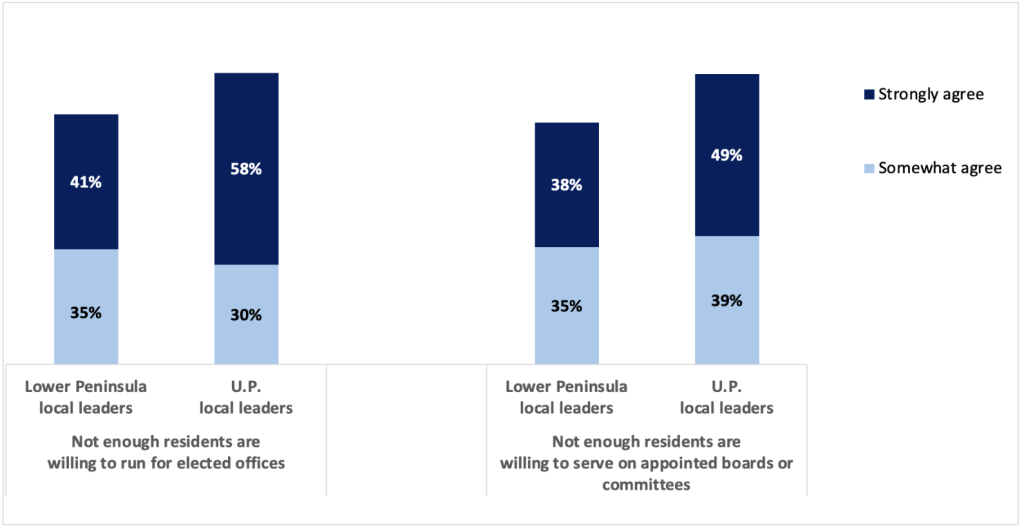
Figure 1 – Percentage of local officials who agree or disagree with concerns over residents running for office or serving on boards.
Figure 1 shows that local officials in the U.P. are more likely than those in the Lower Peninsula to report that not enough residents are willing to run for office or serve on boards, highlighting a greater participation challenge in the region. Only 7% of U.P. leaders said they had no problems at all finding residents to run for office or serve on boards, showing how widespread these issues are.
U.P. officials are also more likely to be concerned about recruiting new and younger participants. For example, 41% of U.P. leaders report difficulty finding new people to run or serve, compared to 33% in the Lower Peninsula. The gap is even larger when it comes to younger residents, with 71% of U.P. leaders reporting difficulty, compared to 60% in the Lower Peninsula. This suggests that participation challenges in the U.P. are not only about overall engagement, but also about sustaining the next generation of local leadership.
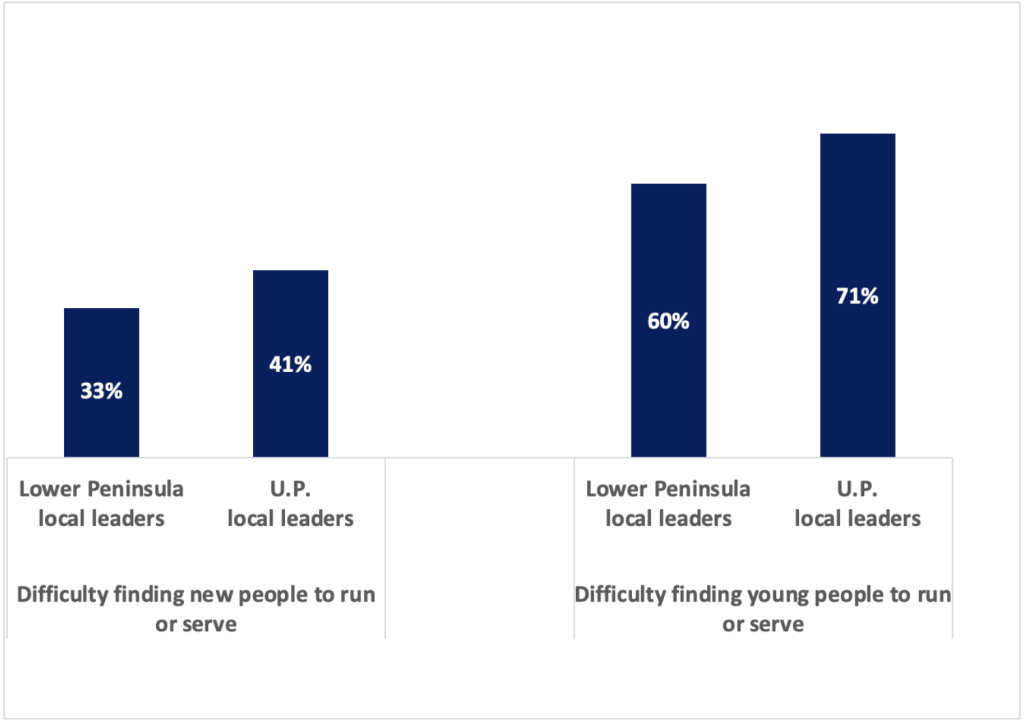
Figure 2 – Percentage identifying specific problems related to finding residents to run for office and/or serve on appointed boards.
To encourage participation, local leaders indicated on the survey that word-of-mouth is one of the most effective strategies (78%), followed by social media messages (57%). Other outreach methods, like partnerships, advertising, or mentorship programs, were less commonly seen as effective, suggesting that boosting engagement will require approaches that leverage local networks and personal connections.
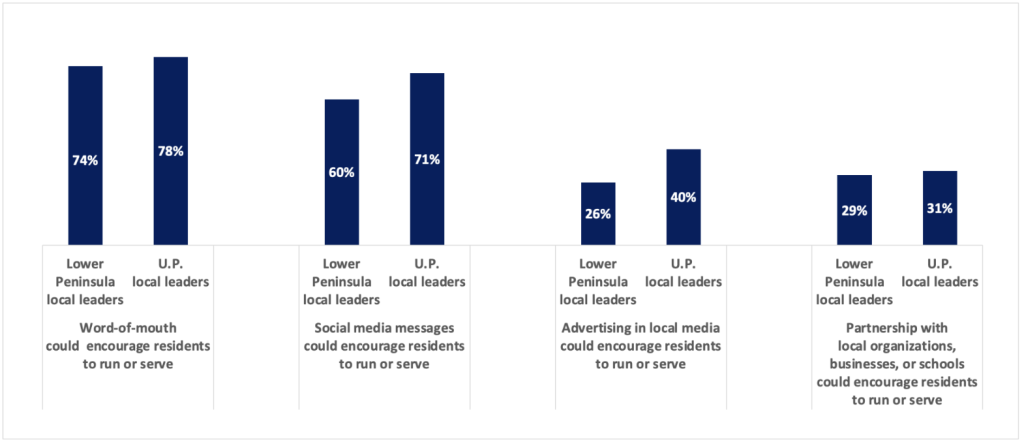
Figure 3 – Percentage identifying outreach methods most effective in their jurisdiction for encouraging residents to run for office or serve on appointed boards.
In the U.P, these challenges feel even more real. There are simply fewer people to rely on, and communities are more spread out. This makes it much harder to stay involved. When you combine that with the kind of pressure these numbers reflect, such as less funding, uncertainty about revenue, and limited public support, it’s not surprising that public participation in local government can be hard to sustain. A lot of the time, it ends up being the same people stepping up again and again. I know I certainly saw that in my hometown.
That’s why I see resident participation as something that isn’t just helpful, but necessary for towns to function. To me, this is especially important in rural places like the U.P. Local governments rely on people being willing to step up, whether that’s running for office, serving on a board, or just staying engaged. Without that, the system doesn’t just struggle, it can actually start to break down entirely.
At the end of the day, I keep thinking back to how I grew up. If someone didn’t step up, then things simply just didn’t happen. That’s kind of what this all comes down to. The numbers show that local governments are struggling, whether it’s with funding, maintaining services or figuring out what residents actually support. In the U.P, where there are already fewer people, that pressure feels even bigger. If there is any real solution, I think it begins with making it easier for people to get involved, so it’s not always the same people taking the weight of all the work. Because in places like where I’m from, communities only thrive if people are willing and able to step up.




Did you consider how the current leaders are not readily giving up their spots? Encouraging younger leaders to take the lead by giving up the reins.
Maybe in a subsequent issue, you can tackle the question of why it is difficult to attract local people to public office in the upper peninsula. While there are many challenges, one that I have personally experienced is animosity to “outsiders“. I moved to a small community in the upper peninsula six years ago and immediately expressed interest in supporting the community through public service. I was appointed to the planning commission, but was constantly reminded and, yes, harassed for not being a “ yooper”. This became such an issue that it was no longer worth my time and effort, and I resigned. Other newcomers have experienced the same thing. Very often small town government entities are viewed as the property of “locals “to serve their ends and their ends alone. Ultimately what needs to be considered is consolidation of governing units. My township has 1200 residents and the two townships around us have less than 500 each. Consolidation would at least increase the pool of candidates for local office. Thanks for taking the time to write this article.
Good comment. 30 years ago we moved to booming resort county in TN. The population has more than doubled since then but nobody without multi generational roots need run for any office. The internal power structure is baked in and with it the direction of development is unchangeable. When given opportunities to weigh in on decision making we transplants are met with: We don’t care how you did it in Michigan, that’s not how it works down here.
I don’t have a solution but you’re not alone in your frustration.
Thanks Bob for your comment. As a Saturn transplant in Spring Hill Tennessee 36 years ago, I know that frustration here in Maury County, Columbia Tn. I have watched over and over that very impact in local and state government candidates who were not born and raised here. How it affects everyone when real issues are not addressed. We press on for a better day. I’m proud to be born and raised in Flint Michigan. Yoopers like Southern folks are “true blue” in their ways to a fault. I’m also proud to be a Tennessee Volunteer!!!
Modifications to the bylaws, allowing “virtual quorum ” would benefit tremendously.
Excellent article. And as one commenter says, not one specific to the U.P., but certainly with lower populations and increasing median ages and declining birth rates, a very serious problem in the U.P. The lack of younger people to get involved coincides with the decline in births, it is dificult to financially afford children and live up to the requirements of child rearing without both parents working full time, then raising children what time is left over to participate in midweek community governance? Consolidation of units is a very wise idea but tradition and local control especially when small units are governed by long time residents is going to be problematic to accomplish. Maybe pay or significantly raise pay for community positions?
Pay for being on appointed boards maintains membership as well as providing funding to attend training sessions…seems the only person that does receive compensation is elected…they receive per diem for attending meetings.