
Maintenance, Not Growth: U.P. Local Leaders Reflect Statewide Funding Strains
Tristin Smith is a research assistant at the University of Michigan’s Center for Local, State, and Urban Policy (CLOSUP), where she works on the Center’s “Close Up on the UP” project. She is a senior in the School of Information majoring in Information Analysis and minoring in Digital Studies and is part of the U.P. Scholars Program.
“CLOSEUP on the UP” is a collaboration between CLOSUP, U-M’s UP Scholars Program, and Rural Insights.
Growing up in the U.P., I’ve witnessed small towns having to survive on tight budgets and a strong sense of community effort, including in my own. Reading a recent Michigan Public Policy Survey (MPPS) report made it clear how much pressure local governments are under right now, especially in the U.P.
The data shows that local government officials are worried about having to reduce the services their communities can offer. Services that are expected to be trimmed in the coming year are things such as: road maintenance, emergency services, parks, and basic administrative functions that make sure the county, city, or town stays running.
Local governments in Michigan rely heavily on property taxes as their primary source of funding, and also statutory revenue sharing from the State, which has been declining over decades. Across the U.P., officials say the current system isn’t keeping up with rising costs of basic services, according to the Spring 2025 MPPS.
While the report includes data about the entire state, responses from U.P. leaders track closely with the trends shown in the report. Looking at the results, it’s clear the U.P. is a region that is largely trying to hold steady where they are, and are unable to grow under the current system of local government funding. As shown in Figure 1 below, statewide, only 29% of local officials agree that Michigan’s funding structure will let them maintain their current services. An even smaller group (16%) think that they will be able to improve or expand upon what they offer. The U.P. follows this same pattern.
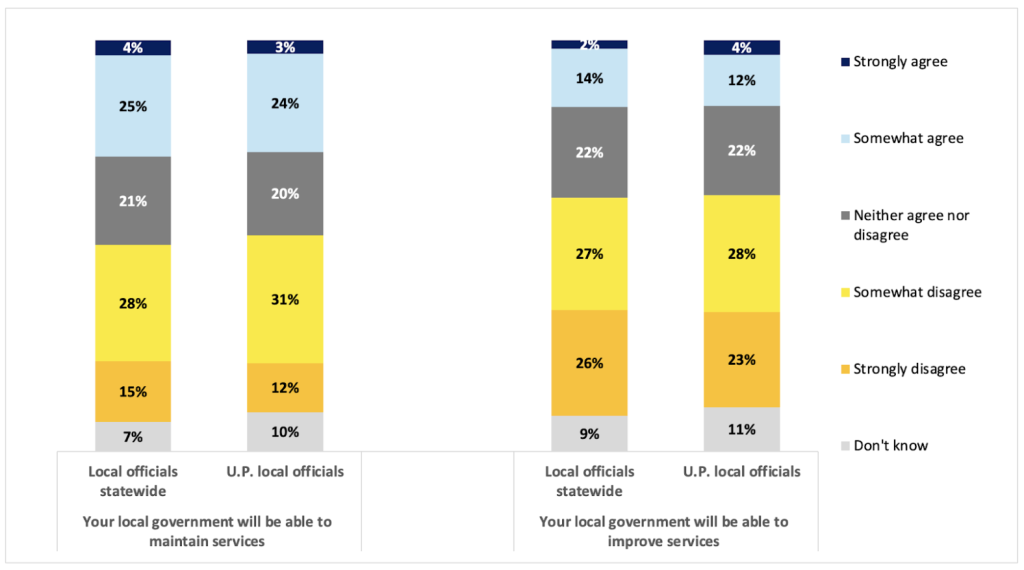
Figure 1: Local leaders’ views on whether Michigan’s current system of funding local government will provide adequate funding to maintain or improve the services their jurisdiction offers
When it comes to exploring new ways to increase local revenues, support in the U.P. is limited. When local leaders were asked on the survey about whether they’d support seeking additional local funds (if a local tax was an option), the most supported one statewide is increasing tax millage, with 33% of local officials backing it.
U.P. leaders report similar levels of support (32%) Other statewide numbers demonstrate the limited support to change the local tax system. For example, just 30% support a local hotel or lodging (tourism) tax and 27% support a sales tax on alcohol/tobacco, and several other options, such as local gas taxes, local income taxes, general sales taxes fall between 8-12%.
The MPPS also reports declining support over time for expanding local tax authority, meaning leaders are growing more hesitant, not less, to ask residents for new revenue. Many say their communities are stretched thin and local taxpayers cannot absorb much more without facing financial strain.
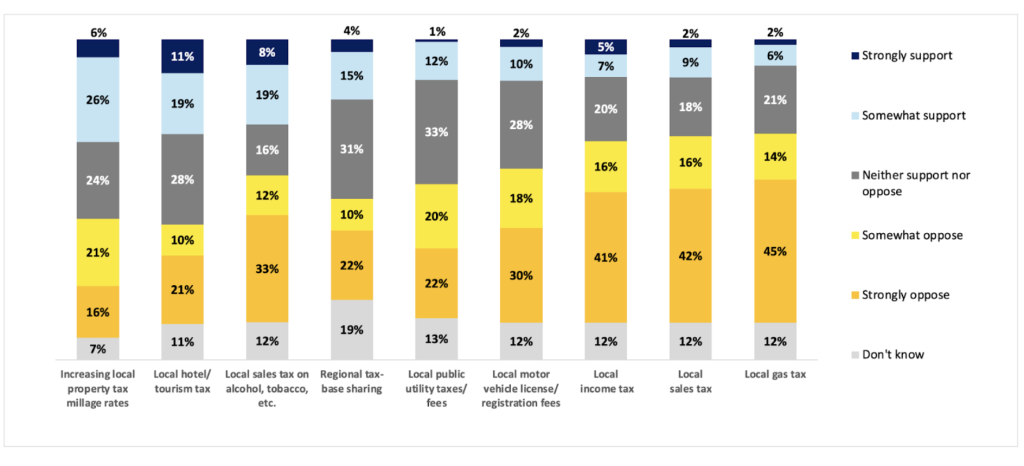
Figure 2 – U.P. local leaders’ support for or opposition to their jurisdiction introducing or increasing various local revenue options
The numbers also highlight a real problem for the U.P.: if local governments don’t have many ways to bring in more money, how are small communities supposed to keep things running? Most aren’t trying to grow or expand – they are trying to hold onto the services they currently have and can provide to their residents and businesses. However, yearly increases in the cost of things such as snow removal, EMS, road repairs, and basic staffing can make even “maintaining” feel out of reach.
The report doesn’t make predictions or give opinions, but the numbers themselves raise big questions. If towns already struggle to raise revenue now, what happens when the tax base keeps shrinking or costs continue to rise? And for places in the U.P. where one small township relies on another or on their county for shared services – like fire coverage or road equipment – what happens if both governments can’t keep up?
If every U.P. township or city is already feeling stretched thin, then no one has the capacity to step in and help their neighbors. It creates a domino effect where multiple communities are struggling at one time, and essential services are at risk.
I want to note that importantly, this is not really about politics. U.P. officials, regardless of partisan stance, are saying the same things. The current funding system does not give them the tools they need, and it is increasingly getting harder to keep their local governments fiscally stable.


Because of our population (3% of state) , the UP has as much relevancy to the denizens of Lansing as the State of Arkansas. Except for a week on Mackinac Island to preen for the downstate media, our state politicians have no reason to care about its UP territory.
Well said, sadly true.
It seems that there needs to be a definition of who the local leaders are in this article because several of the public school systems are in dire need of infrastructure maintenance that has been delayed due to lack of funds, public libraries are also often looking for increased millage to cover maintenance and services, etc.
How does the impact of brownfield authorities in communities impact the maintenance of local infrastructure and services? It seems that these have impacted local communities adversely over many years. It seems that there hasn’t been much said to really describe the process let alone the short and long term benefits to the local community.
Hey, here’s an idea! How about some of the ubber wealthy Universities (i.e.UM $19 billion endowment) pony up some money to help out some of the local schools, libraries, etc. Put the money to good use for local residents.
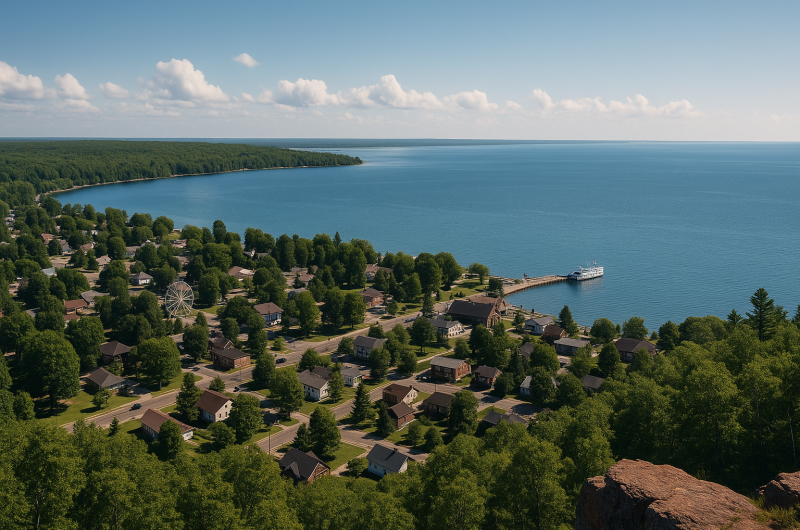
That photo looks like AI slop. Why would you do this when the world is full of real photos with creative commons licenses?